What Is ICF?
At Jems Homes, we realize using the right building materials does make a difference. That is why we use Insulated Concrete Forms (ICF) for homes and pools, creating structures that are incredibly strong, energy-efficient, and built to last. The combination of reinforced concrete and continuous insulation makes ICF perfectly suited to Ohio and Indiana’s climate, delivering comfort, durability, and long-term savings.
Benefits of ICF

Energy Savings
ICF construction maximizes energy efficiency for both homes and pools. In homes, the reinforced concrete core and continuous insulation reduce heat transfer to keep living spaces comfortable year-round. For pools, the same ICF design helps water retain warmth longer, reducing the energy needed to heat it and lowering operating costs.

Enhanced Comfort
With ICF, you can feel the difference. The dense, insulated walls help maintain consistent temperatures in your home and keep pool water warmer for longer, while eliminating drafts and heat loss. The result is a comfortable, energy-efficient environment you’ll notice every day.

Fire Resistance
Safety comes standard with ICF. The concrete core is naturally fire resistant, slowing the spread of flames and protecting the structure for longer periods during a fire. It also provides greater defense against accidental blazes.

Storm Resistance
ICF provides storm-resistant homes and pools built to last. Reinforced concrete walls protect homes from extreme weather, including tornadoes, while pool shells remain strong and durable season after season. The ICF system also resists mold, rot, and pests, giving you a low-maintenance, long-lasting investment.

Sound Absorption
Every home should feel like a retreat. The dense concrete and foam layers in ICF walls naturally block and absorb sound, keeping outdoor noise where it belongs—outside. Whether you live on a busy street or in a quiet neighborhood, you’ll enjoy peace and privacy inside.

Sustainability
Because ICF homes and pools are more energy efficient, they leave a smaller environmental footprint. Less waste is created during construction, and the longevity of ICF structures means fewer materials are used over time.

Thermal Bridging Elimination
One of the key advantages of ICF construction is the elimination of thermal bridging. Traditional building methods often allow heat to transfer through studs, creating areas of energy loss. With ICF, continuous insulation around the concrete structure prevents this, keeping your home and pool more energy-efficient.
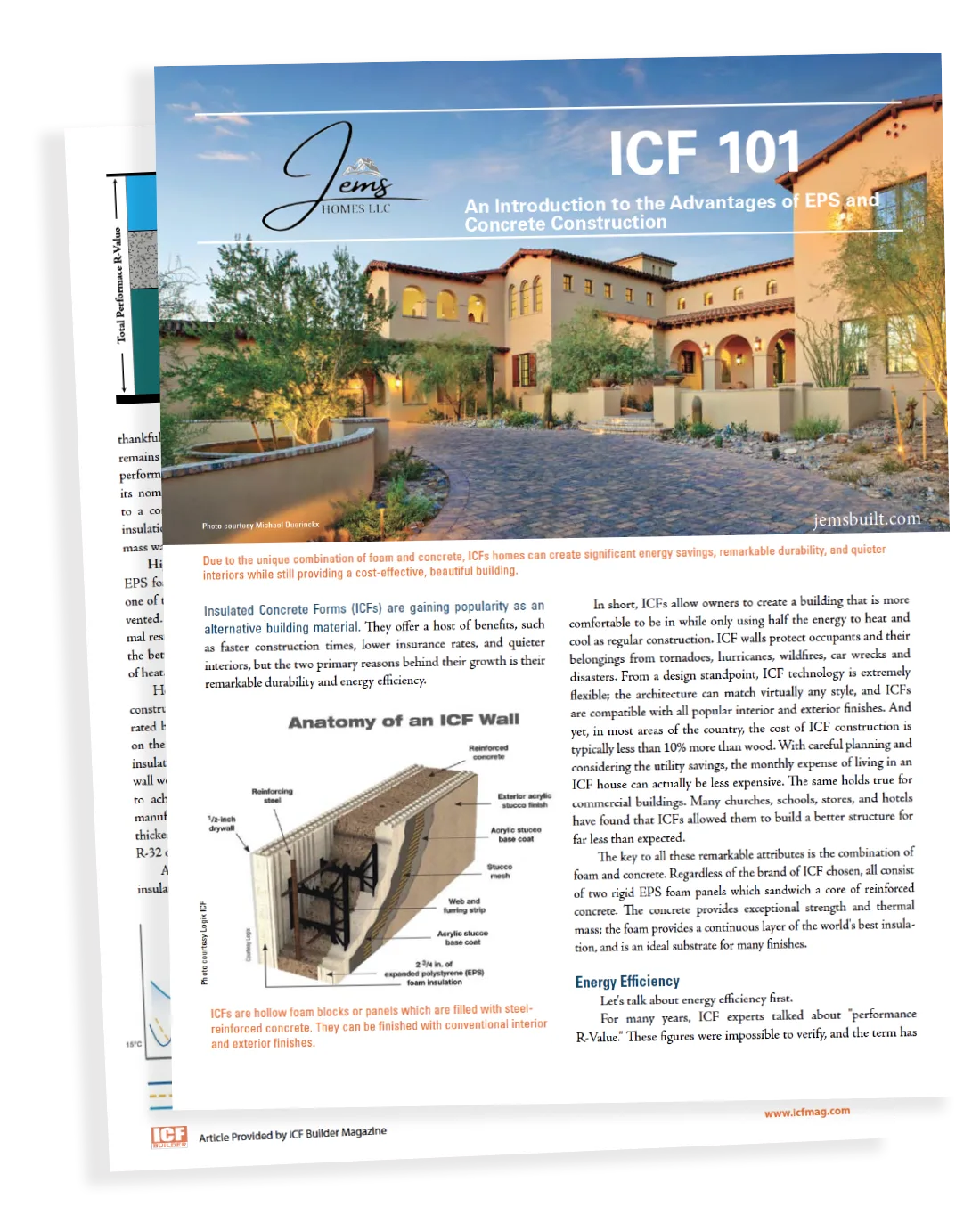
FREE GUIDE: ICF 101
Curious how Insulated Concrete Forms work? Download this quick guide published on ICFMAG.com, to learn how ICF construction delivers lower energy bills, stronger protection from severe weather and fire, and quieter, more comfortable living.
How Insulated Concrete Forms Are Built
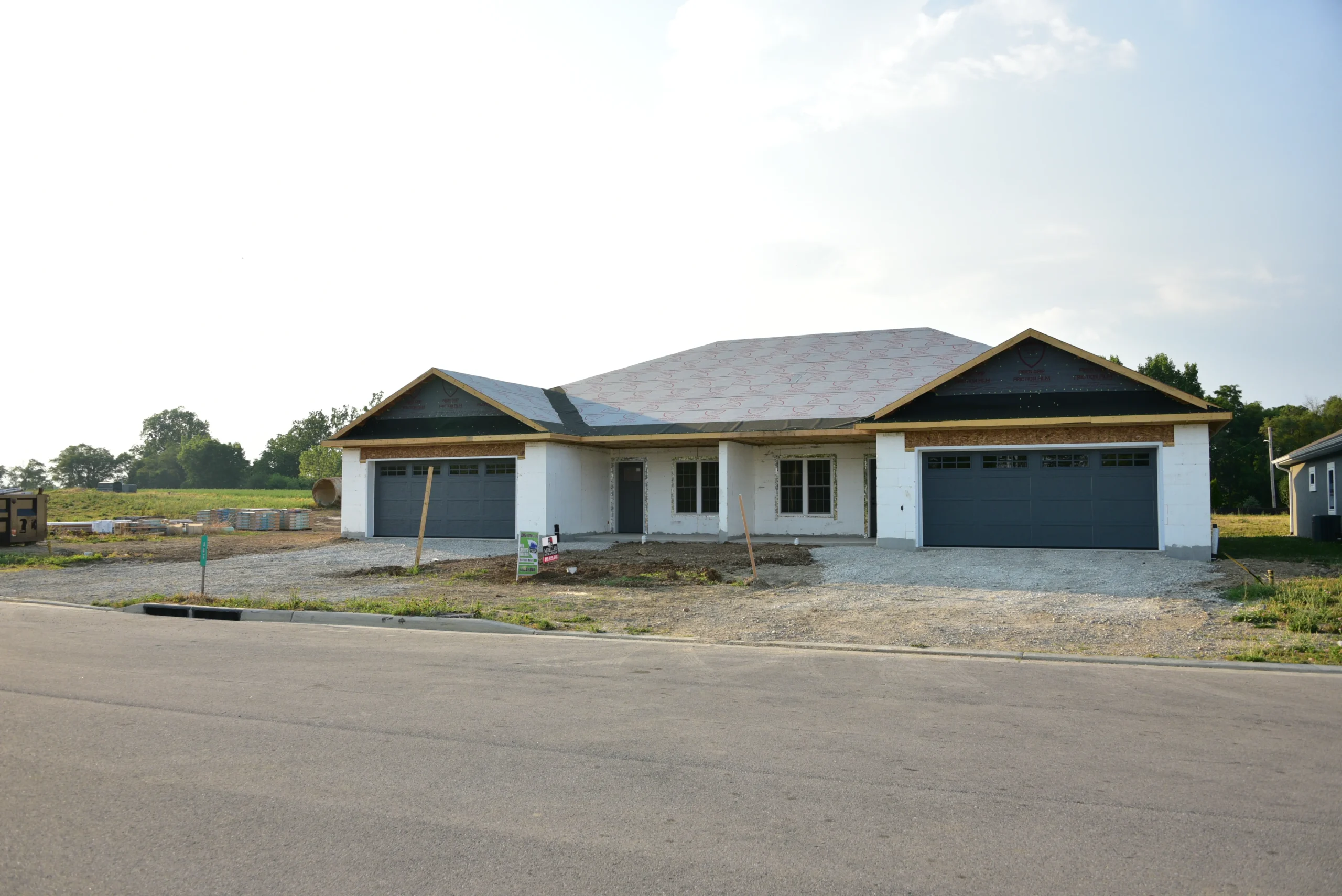
ICF construction starts with hollow expanded polystyrene (EPS) foam blocks that interlock to form the shape of the walls. Once stacked, steel reinforcement is placed inside the cores to add structural strength. Concrete is then poured into the forms, bonding the steel and foam into a single, solid wall system.
The result is a thick wall that combines the insulation of foam with the strength of reinforced concrete, creating a home that’s stronger, quieter, and far more energy-efficient than wood-frame construction.
Why We Build With ICF
With 60+ years of experience in construction, our team has seen firsthand what makes a swimming pool and home stand out and last. ICF construction consistently outperforms traditional methods in strength, safety, and energy efficiency. It’s a smarter way to build for Ohio and Indiana’s climate.
From custom concrete homes to HOA communities and even ICF pools, we’ve made it our mission to bring this better building system to more homeowners across Ohio and Indiana.
Frequently Asked Questions
What Is ICF Construction?
How Does ICF Differ From Standard Wood-Frame Construction?
What Does The Wall Assembly Of An ICF Home Actually Look Like?
Is ICF Construction Only For Certain Climates?
Can ICF Be Used For The Entire Home Or Just The Foundation?
What Does ICF Home Construction Cost?
Why are ICF homes more energy efficient?
How strong is an ICF home compared to a wood-frame home?
A reinforced concrete wall is structurally in a different category than wood framing. ICF walls are routinely tested and rated to withstand wind speeds exceeding 200 mph. They resist impact forces that would destroy wood-framed walls. FEMA has specifically identified ICF construction as an appropriate method for above-ground safe rooms because of its structural performance.
Why are ICF homes quieter?
Are ICF homes really more resistant to storms?
The evidence is well documented. After major hurricanes and tornadoes, ICF homes have repeatedly remained standing in areas where wood-frame homes were destroyed. The concrete structure doesn’t crack, the walls don’t blow out, and the connection between walls and foundation is reinforced at the rebar level. This is not a marketing claim; post-disaster engineering assessments and FEMA guidance on resilient construction back it.
How does ICF construction reduce pest problems?
Schedule a Consultation
Ready to build your dream home? Let’s discuss how ICF construction can transform your vision into a home that performs better and stands the test of time.